BD Rowa Website Relaunch Case Study
The future of Pharmacy
BD Rowa manufactures automated warehouse systems for pharmacies, hospitals, wholesalers, and packaging centers. The organization segments customers into four distinct groups, each requiring personalized website experiences and user journeys tailored to their specific needs and use cases.
My Role:
As Lead Product Designer, my responsibilities included competitive analysis, customer interviews, design thinking workshops with stakeholders, sitemap development, customer journey mapping, wireframe creation, and clickable prototype development for a product configurator.

Problem Statement
We started by reviewing the existing user experience to understand how people currently interact with the product. By combining a UX analysis with analytics data, we identified key user pain points and validated them with real usage numbers.
Wrong User Journey
With the old implementation, users were pushed into the pharmacist journey despite them being from another user group such as hospitals, wholesalers, or packaging centers. Only 3% of visitors actually personalized their experience, meaning the vast majority were served content that didn't match their needs.
Wrong Entry Points
Many entries into a category were not happening through the main site. We discovered this must happen through the Rowa Content Hub (Blog Articles) which is linked to sites that were outside the original sitemap structure. These untracked entry points made it impossible to understand complete user journeys.

Old Navigation Structure
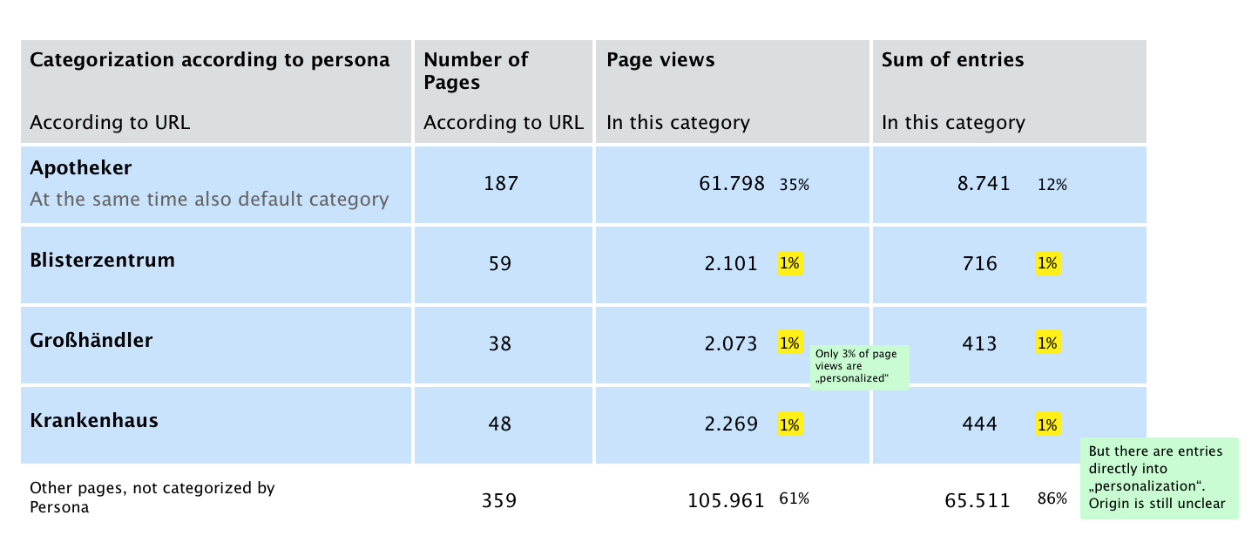
Analytics Metrics
Workshop with the team from BD Rowa
I prepared a Design Thinking Workshop with the Stakeholder team from BD Rowa and printed out all the problems that we found by analyzing the website and the provided data. The goal of this workshop was to have the whole team on the same page, create as many ideas as possible, and to resolve the main structure of the website. We used exercises like Stakeholder Maps, How Might We? and Card Sorting. The result was a list of to-do's and a first kickoff to start the "ideation and decision" phase.
Workshop Exercises
- Stakeholder Mapping: The scope was to understand and improve the customer experience of the website. We created a list of all stakeholders involved and clustered them into "Internal Stakeholders", "Direct Stakeholders" and "Indirect Stakeholders", positioning them inside specific product groups.
- "How Might We?" Exercise: We converted all the issues from our analysis into user stories, printed them out, and tackled them one by one with the whole team. Using a timeboxed frame, the team had 2 minutes to write solutions for each problem.
- Card Sorting: The group wrote individual information elements on post-its, then grouped them into categories on the whiteboard. We voted on where specific information should be allocated within the website, providing enough data to create the new sitemap.
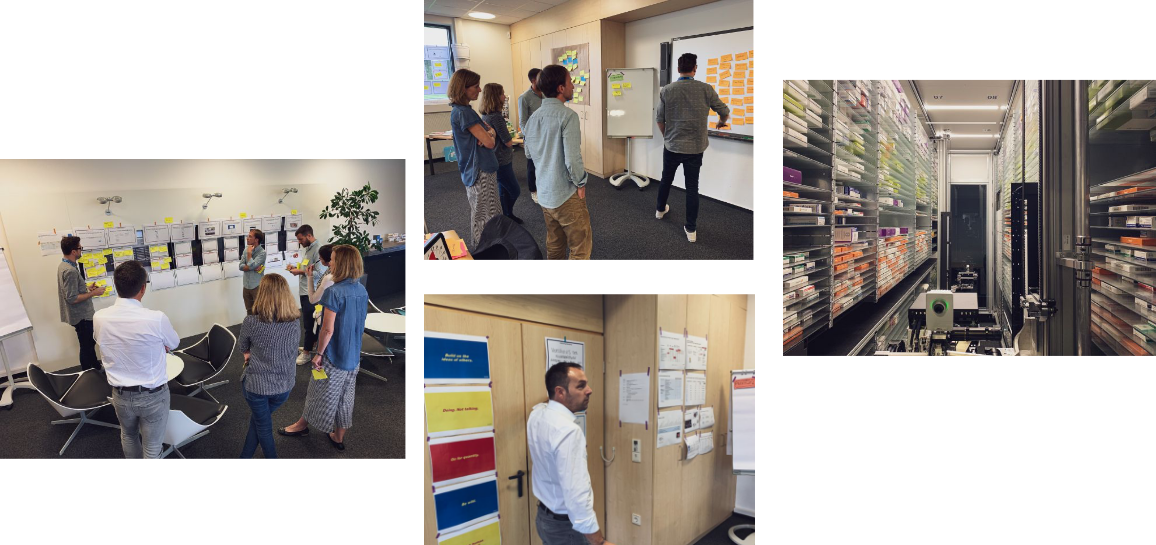
Design Thinking Workshop
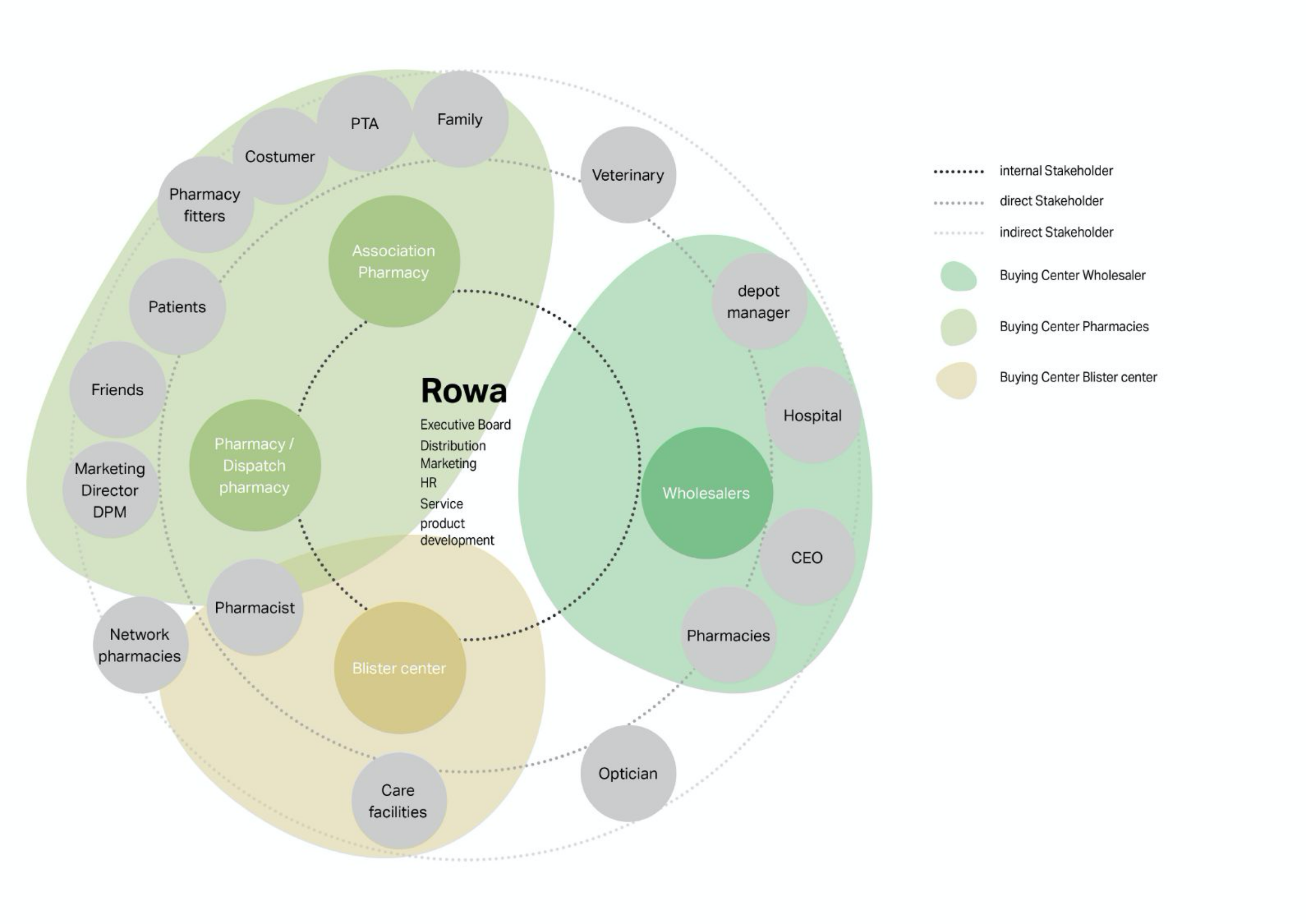
Stakeholder Mapping
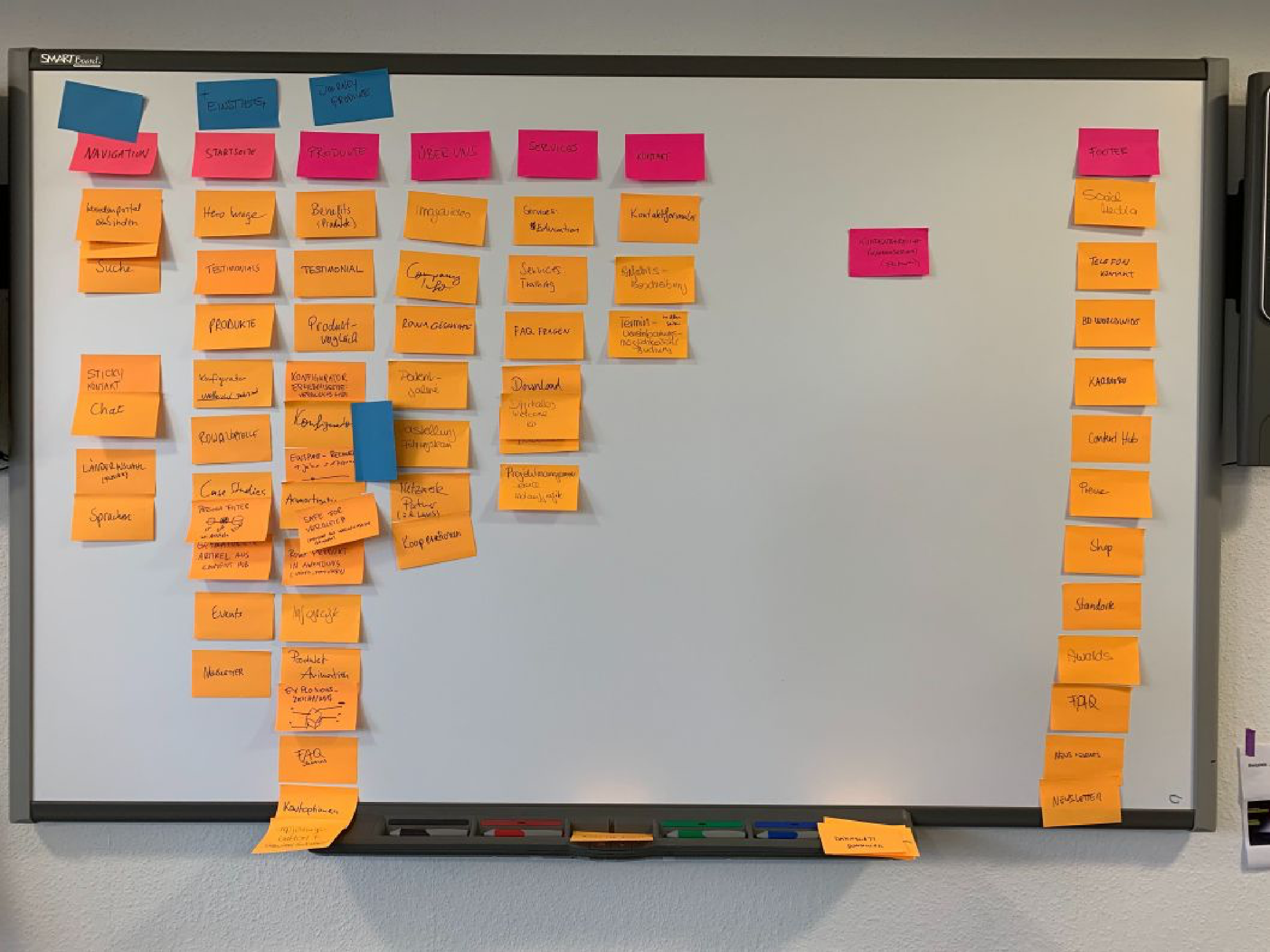
Card Sorting
Synthesis and Learnings
Adapt relevant content on the homepage to match user story
- Emotional address (showing the equipment in context with the user, use & usage)
- Show the end product of the plants
- Integrate references prominently into the User Journey.
- Work out infographics in more detail
- Adapt comparison module
- Wording: Space available, Up to 65% more space
- Name models in the picture by name
- Adaptation of the use-case of the module "Which Rowa suits you?"
- Focus more on additional services (seminars, training & education)
Optimize user experience on the website
- Simplify newsletter registration
- Avoid additional clicks (e.g. in the configurator)
- Visible contact/service module for quick access to the hotline
- e.g. provision of whitepapers and studies as download with e-mail query
New creation of relevant content for target audience
- View into the vending machine / glass vending machine / functional principle.
- Competitive comparison.
- Contact person introduction/consultant team
- Service-Success-Stories ("So fast was the spare part there")
- Amortisation-Case/Story ("With a usage of 4 years, you can expect 170.000 € more turnover") incl. amortisation calculator (module)
- Show the advantages of the software
User Journeys
Based on our workshop findings and synthesis, we mapped out the different user journeys for each customer segment. This helped us understand how pharmacists, hospitals, wholesalers, and packaging centers navigate through the website differently and what information they need at each stage of their decision-making process.
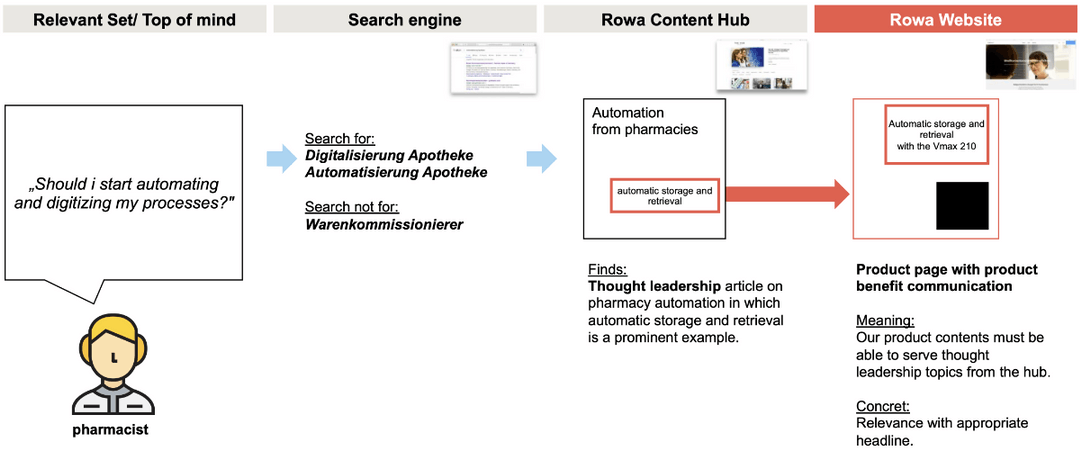
User Journey Mapping
Sitemap Adaptation
The redesigned architecture decoupled industry selection from the primary user journey while maintaining accessible filtering options.
Strategic Shift: From user-type-based navigation (client category determined site flow) to topic-relevancy structure with clear visual selection.
Key changes:
- Products attached to selling campaigns
- Primary focus on robot products themselves
- Simplified primary menu
- Removed industry designation as primary navigation driver
Design & Development Phase
Addressed widespread customer criticism while acknowledging configurator value through interviews and analytics. All interface elements designed for mobile and desktop using atomic design principles.
Navigation Redesign
Simplification
- Simplified primary menu
- Emphasis on brand introduction
- Product selection focus
- Removed industry designation
Product Configurator
Improvements
- Reducing friction during exploration
- Configuration without page reloads
- Space requirements variables
- Packaging quantities & add-ons
Responsive Module System
All interface elements designed for mobile and desktop using atomic design principles. Stakeholders participated in agile feedback through InVision, enabling real-time commentary and iterative refinement.