I led the design team across the consolidation, partnering closely with frontend, backend and product. My work covered multibrand design-system architecture, brand consolidation strategy, atomic component-library direction and incremental migration design.
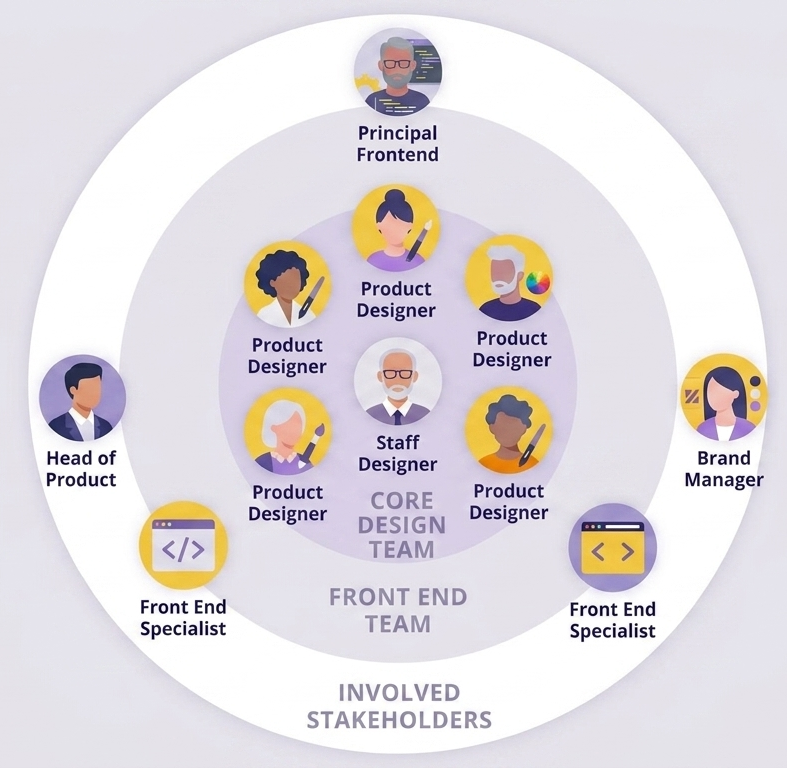
Stakeholder map for the consolidation
01
The merger
02
Team restructuring
03
Product strategy
04
Design system alignment
05
Gradual launch
06
Project harmonization complete
SMG ran three competing real-estate portals, each with its own design language, component set and codebase. That meant triplicated maintenance, inconsistent UX, slow shipping, and every future acquisition starting from zero.
3 design languages
Three separate visual systems to keep in sync.
3 frontend codebases
Every fix and feature built three times over.
0 shared components
Nothing reusable across the portals.
Before consolidating, I audited each brand on three axes: brand equity, technical health and audience. Those inputs decided which brand would lead and which platform would host.
Brand equity. Just rebranded, with the freshest and most coherent identity of the three. Strong brand, but not the cleanest codebase.
Technical equity. Least technical debt, healthiest frontend and backend. Older brand identity, but the soundest foundation to build on.
Audience equity. A loyal niche audience and modern feel, but the smallest footprint: a brand to preserve, not to build the platform around.
The brand users see and the platform we build on are different problems. Treating them as one is how consolidations stall, so I solved them separately.
Lead brand
Freshest identity to standardise around
ImmoScout24 had the most coherent identity after its rebrand, making it the cheapest brand language to scale across the ecosystem.
Tradeoff
I had run that rebrand, so I flagged my own bias and had the call pressure-tested by others.
Host platform
Healthiest codebase to migrate onto
Homegate had the least technical debt and the strongest technical foundation, making it the safest platform choice.
Tradeoff
The strongest brand was not the strongest platform, so we stayed disciplined about separating those decisions.
Instead of maintaining three design systems, I built one: shared atomic components, with each brand expressed as a set of design tokens for colour, type, spacing and iconography. The marginal cost of the next brand drops toward the cost of a new token set. We called it Tomodachi.
Shared Components
Tomodachi Whitelabel Component Library
Structure, behavior, accessibility and layout are built once.
Same components, ImmoScout24 tokens

Same components, Homegate tokens

Same components, Flatfox tokens
widgets
Atomic source of truth
add_business
Acquisition-ready
Because brand identity lives entirely in tokens, a single component renders as any brand by swapping its token set. Same structure, same logic, same accessibility: only the skin changes.
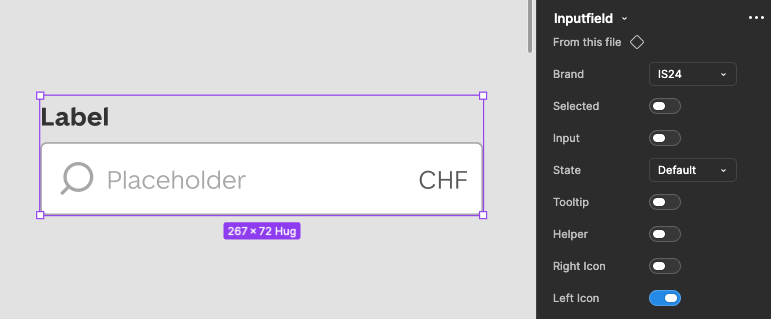
One shared component
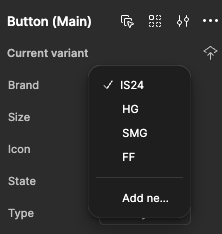
Three branded outputs
Revenue Goals
Take rate increased by 48%
By offering our customers an easy way to crosslist and increase their visibility.

speed
Product Design velocity up by 70%
Because of Whitelabel solution, designers can work on 1 platform delivering for 3 brands.
token
Maintenance Costs reduced by 66%
Teams got restructured and responsabilities shifted.
hub
Easy integration for new adquisitions
New product adquisitions can be easily integrated and scaled.